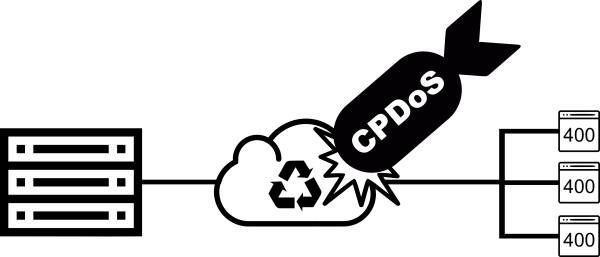
Here is a quick explanation about the CPDoS or Cache Poisoned Denial of Service attack. The attack is detailed here: https://cpdos.org/ (and on archive.org in case the site disappears).
The cache is life
Whether it is in your microprocessors, your software or most of your websites: the cache is at the heart of performance.
When you (or rather a software) will ask the microprocessor to process data from RAM, it is "cached" in different levels of cache, the fastest being the most expensive. If there is a need to access these data again, magic, they are in the cache, no need to go and look for them in the main memory (the RAM), too slow (and even less on the hard disk).
It is the same for a web site. You make a request that will be processed by an application, slow, which will make requests to a database ... and return the content. Many sites put caches in front of applications (this is the basic business of CDN / Content Delivery Network) and, depending on the settings, if a similar request has been made recently, it is the hidden content that is returned to you without soliciting the real application / website.